Was going to visit the Church of the Nativity in Bethlehem, Israel has other Ideas and is celebrating Shabbat which means everything, (even B&Q), closes down for the day. No buses, no nothing.
The streets are silent.
Nature is in recovery.
Offgrid living on UK waterways

Was going to visit the Church of the Nativity in Bethlehem, Israel has other Ideas and is celebrating Shabbat which means everything, (even B&Q), closes down for the day. No buses, no nothing.
The streets are silent.
Nature is in recovery.
So much to see within the City Walls, it’s an experience in itself.
Old City is built in a valley, made up of a series of walkways, divided to 4 quarters reflecting the religious persuasion of that sections inhabitants.
I’ve devoted my attention to visiting the three most important sites in Jerusalem Old City:-
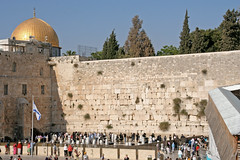
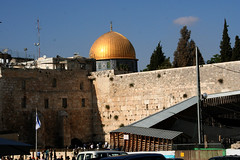
Jews – The Wailing Wall or Western Wall
KML 31.77607 35.23377
Originally making up part of Temple one for David, this Western wall is all that remains of the structure after being sacked by Titus Caesar of the Roman Empire, leaving a small part of the temple wall to give camp to his troops.
It is said that God offered his protection to the Temple in Midrash saying it would never be destroyed for when water ran from between it’s cracks, it symbolised the coming of the Messiah.
Jews approach the wall whilst bowing and kissing, some place hand written notes in the cracks. When they are finished bowing, kissing and praying they must back away still facing the structure.
This is tradition.
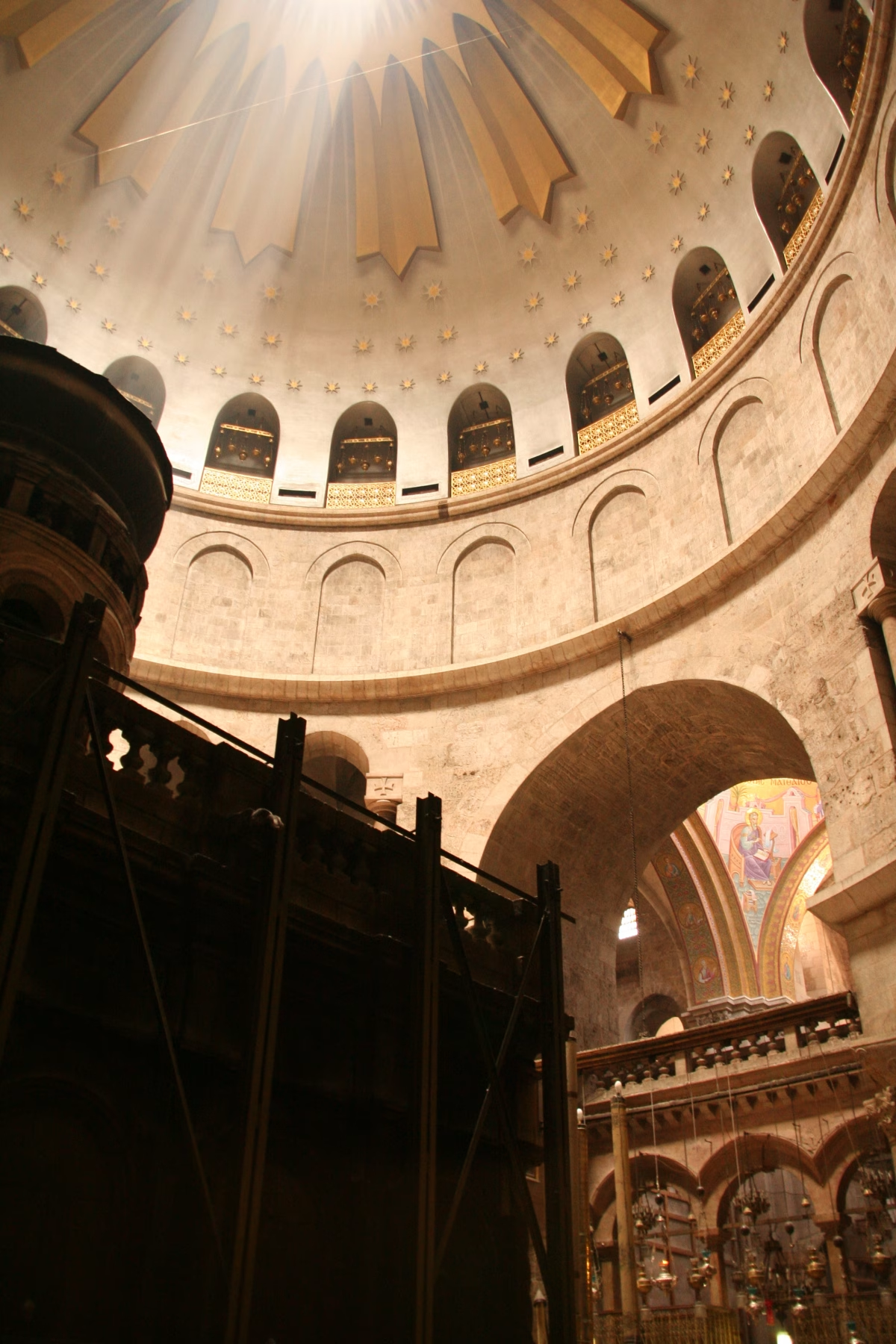
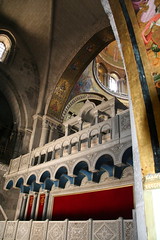
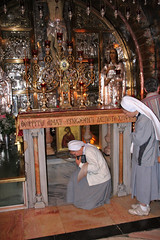
Christians – The Church of the Sepulcher
KML 31.77802 35.22980
Built on Golgotha site of the Crucifixion of Jesus Christ around 333 by Emperor Constantine and the Bishop Saint Macarius. The church was fully destroyed in 1009 Al-Hakim bi-Amr Allah and Control of Jerusalem, and thereby the Church of the Holy Sepulcher, continued to change hands several times between the Fatimids and the Seljuk Turks (loyal to the Abbasid caliph in Baghdad) until the arrival of the Crusaders in 1099.
The church fell back under Muslim control after Saladin who assigned responsibility for it to two neighbouring Muslim families. The Joudeh were entrusted with the key, and the Nusseibeh, who had been the custodians of the church since the days of Caliph Omar in 637, retained the position of keeping the door. This arrangement has persisted into modern times. Twice each day, a Joudeh family member brings the key to the door, which is locked and unlocked by a Nusseibeh.
Status Quo
In 1555 the Franciscan monks completed a transformation and a power struggle broke out within the various Christian factions for overall control of the site.
Eastern Orthodox, Armenian Apostolic, Roman Catholic, Coptic Orthodox, the Ethiopian Orthodox and the Syriac Orthodox all jockeyed for power and rights, resulted in common area’s becoming a ‘no mans land’ where Status Quo reigned, no work is undertaken, and conflict, often violent, is regular.Divided into different sections, you may want to take a guide, although the church still has impact without it and is graced with many thousands of visitors every day.
Muslims – Dome of the Rock
KML 31.77607 35.23377
This Golden Dome is only accessible by Muslims. Heavily guarded, you will find most of the hostility surrounds this structure and it’s construction on one of the most holy sites of the Jews.
It is the oldest extant Islamic building in the world built in 691 on the spot where Mohammed is said to have ascended to heaven.
The dome is said to have been inspired by the other basilicas around the city, and initially built using 20,000 gold pieces “whose shine could not be witnessed by the bare eye”.
Non-Muslims are not allowed into this section.
These are the main sites, though there are many, many more.
You should spend a few days trying to discover them all.
KML 31.77369 35.2039
Located in West Jerusalem in amongst the government buildings, rose gardens and bird watching sanctuaries, the museum of Israel has a small number of exhibits of particular interest.
Airy breaking up
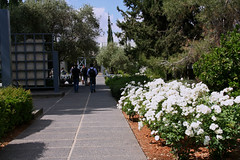
You could be forgiven for thinking you were in an ornamental gardens for there seems to be a certain pride here for all things green. but the gardens are light and airy breaking up the different sections of the museum.
The ‘all in good time exhibition’ – Art
An art exhibition drawn from private collections and national galleries documenting the ‘all in good time’ .
There are a number of works of art which have looked at different aspects of Israeli life, some videos which you can sit and watch on your own in quite auditoriums, large two story sculpture of Ethiopian Jews to the backdrop of various smaller works on canvas through different mediums and different countries.Perhaps by selecting the best of Jewish art, a lot of the stuff is ethnic, culturally original and diverse making it easy to wander round without hurrying from piece to piece, perhaps why they called it the ‘all in good time exhibition’.
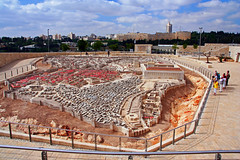
Live Model of Jerusalem
A to scale model of the old city of Jerusalem with the important landmarks belie the cities ethnic divisions, Golgoroth the site of Jesus’s execution and other bits and pieces like the Temple and battlements various pools, theatres, houses, stately buildings. Mostly Hellenistic built around the time of Herod.
For this part, you can get an audio guide. Handheld, this can give you some handy information backed up with a map free of charge.
The Dead Sea Scrolls
Probably one of the most important discoveries of the century, parts of dead sea scrolls were available in markets across Asia minor from the periods of the first crusades and before. The old testament is based on them.
The major period of interest was sparked in the discovery of a number of text attributed to the Essenes, documenting the Messianic prophecies of Isaiah, in a cave in 1947, said to be part of true and original scripts of which there were 1,000.
These are the only publicly available exhibits in existence.
The Isaiah Script and the Temple Scroll that lie here in the museum basically talk about:
- The Children of the Light
- The Children of the Dark
- The Son of Truth or Righteousness
- The Wicked Priest
- The Man of Lies
These are excerpts from the original scripts of Isaiah –
“And, on the whole, from among those who profess to be Christians will rise up then false prophets, false apostles, impostors, mischief-makers, evil-doers, liars against each other, adulterers, fornicators, robbers, grasping, perjured, mendacious, hating each other. The shepherds will be like wolves; the priests will embrace falsehood; the monks will lust after the things of the world;”
“For great jealousy will prevail in the last days, for each will say what seems pleasing in his own eyes. And they will set aside the prophecies of the prophets, which were before me and also pay no attention to these my visions, in order to speak forth from the torrent of their heart.”
Of 1,000 scripts found, those scripts that didn’t fall into the hands of untraceable private dealers were governed by a ‘Secrecy Rule’ up until 1991, when Robert Eisenman and James Robinson published a number of documents followed by Dutch scientist Emanuel Tov laying bare 7 of the scrolls, after which the rule was scrapped and those scripts that are available are mostly published in part, or in the case of the Isaiah Script and the Temple Scroll, in full.
Plenty of links out there, use http://www.yahoo.com/
KML 31.78506 35.20276
In Israel, located at the CP for special rate. Took border crossing over the KHB or King Hussain Bridge. Got some border drawbacks, as usual I was stopped, for more than 6 hours this time.
I worked my way over the border by shuttle bus arriving at the Israeli side for about 11am, it must have been about 5.30pm by the time I passed through customs and only because the border control girl liked me.
Passed through Jordan, now in Israel real.
The next few days will be action packed as I visit all the top spots, cheap eateries and what not’s. Jerusalem seems to have some real character, hopefully I’ll be able to convey this with some good pictures and observations over the next few days.
Here are some travel tips for those planning a trip to south america.
1- NEVER ARRIVE AT NIGHT – chances are you’ll be making those gruelling 20 hour plus bus journeys, the last thing you want is to be wandering round a strange town with all your stuff at the dead of night.
2- YOU WILL GET ROBBED – depending on your outlook, this may be funny, mildly annoying or a personal tragedy. Keep you passport and sexually integrity intact, these things are more difficult to replace.
3- BRING A RUCKSACK NOT A SUITCASE – it may have handles, but I’m afraid that won’t cut it. Lima doesn’t have a Marriott, holiday inn, motel 8 or McDonald’s. Expect to get sand in your wheels and strange looks.
my advice buy a nice purple rucksack (like mine :)).
4- LEARN TO SPEAK SPANISH – better than waving your arms around, you can make friends and get yourself out of trouble, converse in shops etc. etc.
it costs nothing.
invaluable.