

This week, Tesco banned Ribena and Capri-Sun drinks from it’s shelves.
Obesity is just a growing thing in the UK. It’s not a new thing. What’s new is that the industry is seen as safe and not regulated.
Since regulation of tobacco, and the rise of the supermarkets, consumers have had sugar rammed down throats. Literally.

With 23.1% of people being overweight, the UK is now officially the FATTEST country in Europe.
| Country | Average weight | BMI | Daily Calorie Intake | Source |
|---|---|---|---|---|
| United Kingdom | 12 st 9 lb | 29 | 2,200 | [23] |
| Italy | 11 st 9 lb | 26 | 2,100 | |
| France | 10 st 9 lb | 24 | 2,200 | |
| Germany | 11 st 8 lb | 26 | 2,400 |
It’s always safe to reach for another cake.
Plus, it’s acceptable.
From Quartz
Do you ever realize that you’re full, but finish that burger and fries anyway? There may be a scientific reason for that: too little of a hormone called GLP-1, which is thought to play a role in obesity.
Researchers from Rutgers University have found that when GLP-1 is released in the brain, it can actually stop mice from eating beyond their caloric needs for the day. Conversely, when the scientists blocked the hormone in mouse brains, the mice tended to eat more.
Fatty foods have been associated with higher levels of dopamine, a neurotransmitter that signals our brain’s reward system to keep doing whatever we’re doing at the moment. “In order for our brain to function, the information flow has to come from one neuron to another neuron,” Zhiping Pang, a neuroscientist from Rutgers University and lead author of the study, told Quartz. Pang said that his team found that as GLP-1 was released in the brain, it stopped neurons in the brain’s reward system from receiving dopamine. In other words, the GLP-1 from the brain blocked the positive feedback the mice felt from the fatty foods, and they stopped eating.
For the study, mice were given unlimited access to both a balanced diet, as well as foods that were high in fat. The research team used a synthetic molecule to activate neurons in mice’s brainstems, which caused them to produce GLP-1. They found that over the course of 24 hours, mice that produced more GLP-1 from their brainstems stopped eating when they had met their caloric needs. Mice without the GLP-1 boost were more likely to continue eating more food, especially the extra fatty foods.
Because a mouse’s digestive system closely resembles our own, Pang believes this research can help us understand how different brain signals are related to our guts. “The gut isn’t only a digestive organ. It obviously also plays a pivotal role in trying to regulate the eating behavior,” Pang said. He explained that the vagus nerve, which connects the brain to the gut, can also signal to the brain to produce GLP-1, when it detects that we’re satiated.
There have been some treatments for diabetic or obese patients to help raise their GLP-1 levels, but may cause problems long-term-health problems with the pancreas or liver. Pang said in a press release: “By finding out how the central nervous system regulates food intake behavior via GLP-1 signaling, we may be able to provide more targeted therapy [for obesity] with fewer side effects.”
Related Reading

In the 1990’s, a political scientist named Stanley Feldman developed a set of four very simple questions to related to parenting to test the level...

Fasting. People have been doing it from the beginning of time. Saves money, and it’s good for you. I took to fasting when I used...
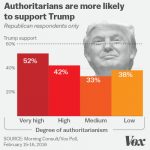
I know I’m not the greatest fan of politics, but it seems to me, Trump with all his lying and making up ludicrous pre-election pledges,...

80+ mysterious deaths of high powered bankers from 2008 - 2026

I’ve lived in one of these countries (China), and visited two (Vietnam, Cuba). Censorship is an accepted way of life, in my experience, residents take...

That would be good