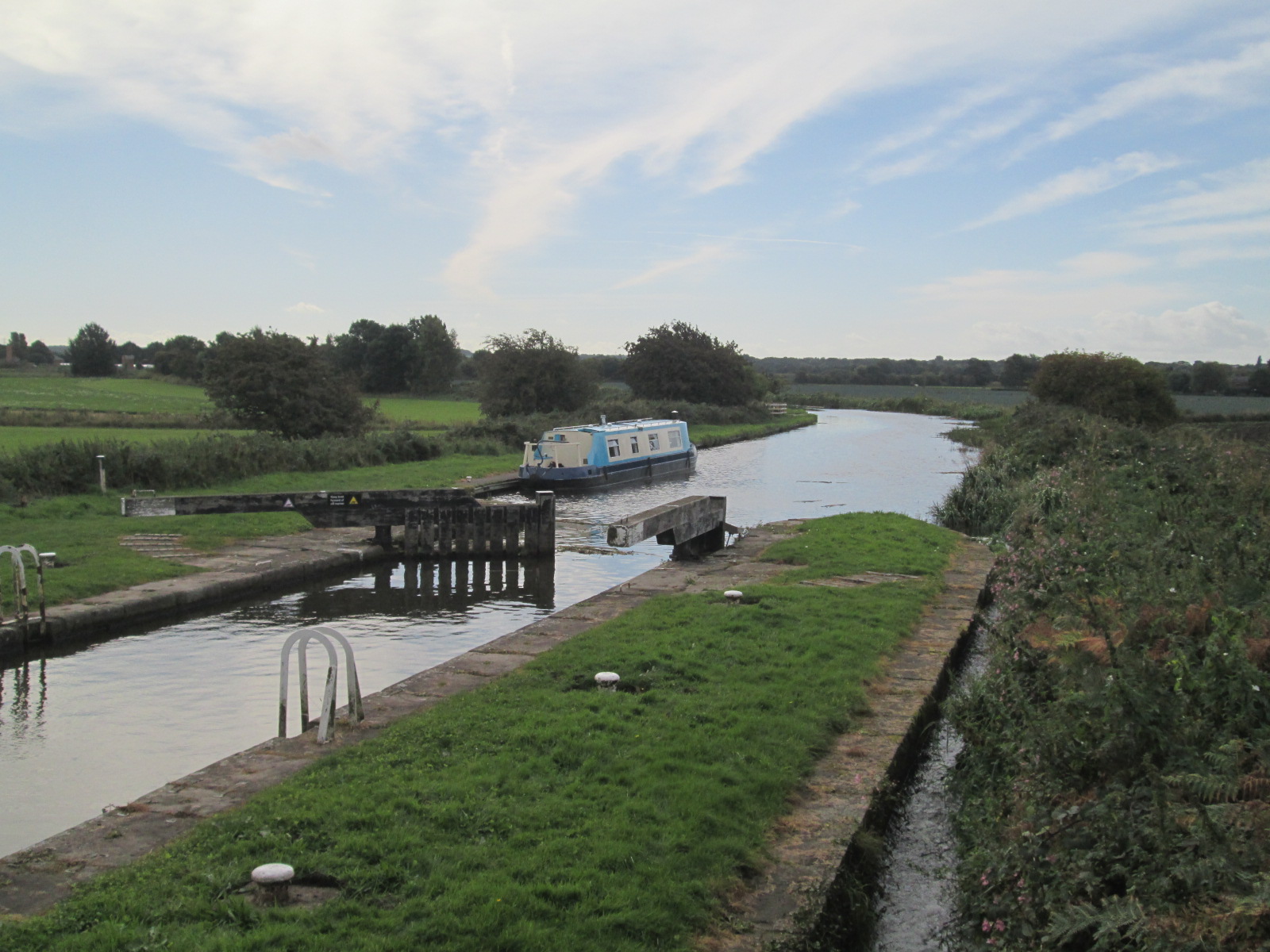
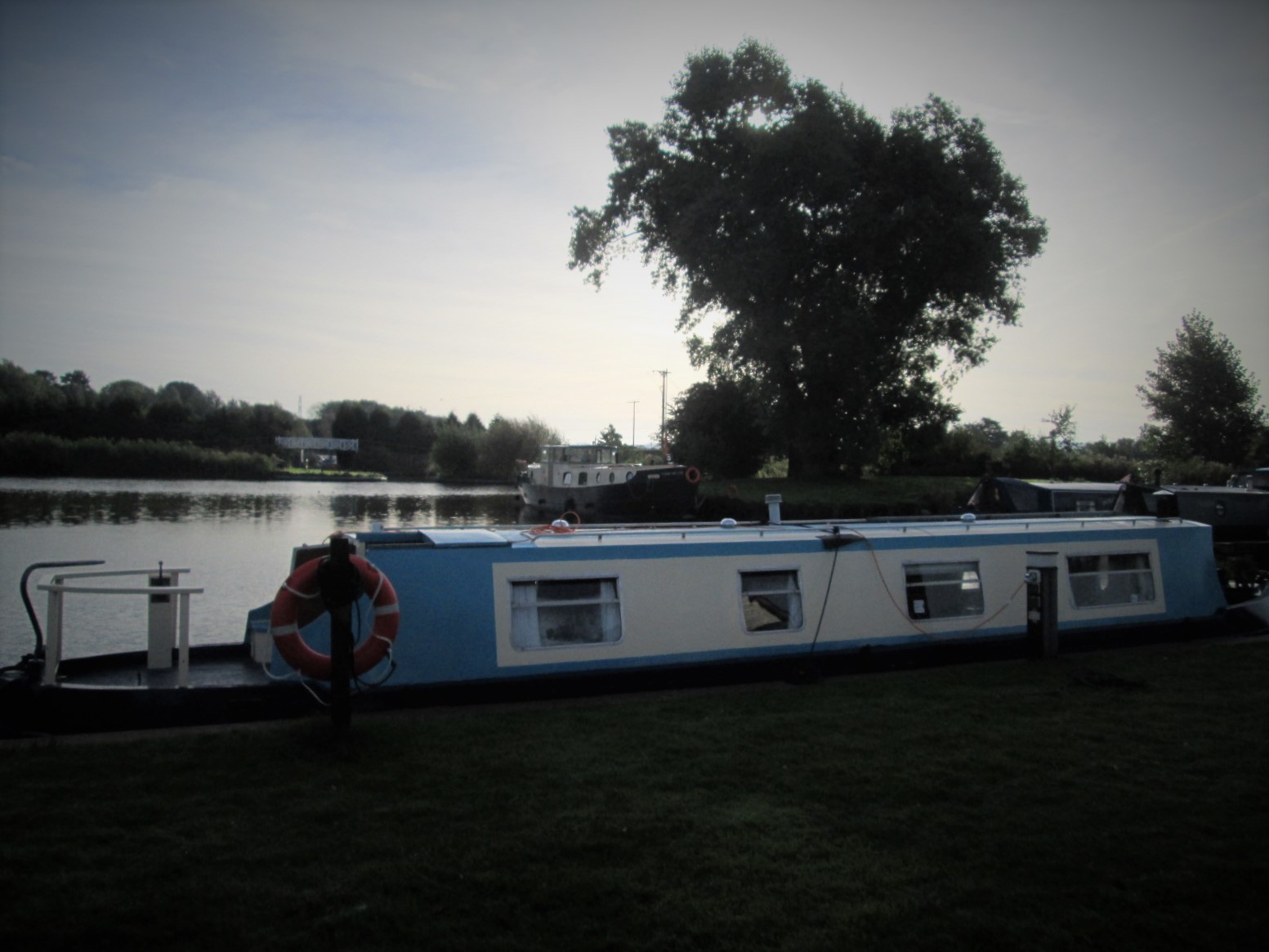
Starting point, St. Mary’s Marina, Rufford
Paint job looks good…..
Continue reading “Day 26 – Rufford to Crooke”Living on a Narrowboat

Paint job looks good…..
Continue reading “Day 26 – Rufford to Crooke”“Piece of cake…” as my host said to me this morning. Turned out to be true. And thanks to Trevelyan House for the breakfast, and the service, all very good.
Didn’t do much around Morecambe.
When I was thinking walking around town, “what is it that Morecambe really needs”, and the answer is a timewarp machine. The good times have passed. It’s as simple as that.
People still pose beside the statue of Eric Morecambe on the seafront, but when that is gone. What have they got?
Got woken up by the fire alarm at 11pm. Thought about going down the pub….
It went off. Being a Tuesday, most people would have called it a night anyhow, so I went back to sleep.
Hauled ass at around 8am, which is the time they start breakfast, which turned out to be a high quality affair for the £33 all in that I paid for the accommodation, breakfast, et al.
Seems that Morecambe itself was the only downfall of the stay. Continue reading “Day 25 – Morecambe to Rufford – 1,000th post eva!”
We all know how keen farming companies are on the rights of the world’s other inhabitants.
From bees and CCD, to manufacturing sterile cereal crops. Monsanto and it’s palls have decided they’re not making enough money in competition. They need to band together to take on man and the planet’s innate rights.
This article looks at the scary world of those genetic/farm giants,
taken from Qz.com.
 Big farms are about to get a lot bigger.
With six agricultural giants on the verge of merging into three separate companies, consumers and farmers are feeling uneasy about the global implications and how it might impact the food system.
Top executives from Bayer, Monsanto, DuPont, Dow Chemical, and Syngenta today (Sept. 20) testified before the US Senate Judiciary Committee in Washington, making a case for why federal regulators should approve the mega-mergers, which stand to fundamentally reorganize global agriculture. (Executives from the sixth company involved in the consolidation, China National Chemical Corp., declined an invitation to appear at the hearing.)
The executives in attendance argued that the proposed mergers would combine their companies’ expertise and allow for greater efficiency in serving farmers and consumers. But whether that efficiency is worth the side effects of massive consolidation—possible price hikes and less competition in the marketplace—is an open question. In essence, should people put faith in three big companies to shepherd consumers and farmers into a world that can responsibly feed a growing global population?
The consolidation of these six highly competitive companies into three juggernauts has left many farmers and consumers uneasy. Consumers advocates say they worry the mergers will usher in a “new era of sterile crops soaked in dangerous pesticides.” Farmers worry that less competition in the marketplace will give the merged companies an ability to increase prices of seeds and chemicals—something that would be particularly harmful during a time when US farm incomes are dropping.

That’s part of the case that National Farmers Union president Roger Johnson made to senators, warning that approval of the mergers would lead not only to higher prices, but also less innovation and fewer products from which farmers can choose. Even the mighty American Farm Bureau lobby expressed some trepidation.
“Any one of these [merger and acquisition] activities could certainly be well understood; all of them occurring at the same time is the challenge,” said Bob Young, chief economist for the lobby. “Obviously you’d rather have six companies…but if the economics aren’t there to justify six companies, it just won’t happen.”
For their part, the company executives stressed that, in a world where internet companies such as Google can quickly pivot to manufacturing driverless cars and Amazon founder Jeff Bezos can invest in rockets, the nimbleness of agriculture will be paramount.
“Change can be rough for farmers,” testified Robb Fraley, Monsanto’s chief technology officer. “But in our industry, it is changing. Farmers are best served with companies investing more in new technology.”
Fraley noted that 15 years ago, Monsanto invested $300 million in research and development; this year it has invested $1.5 billion. By way of comparison, he said big-name technology firms such as Apple are spending upwards of $10 billion a year on R&D.
Left unsaid by the companies was that, with the exception of Bayer, the US and European giants have experienced shrinking sales. As Republican senator Thom Tillis of North Carolina put it, Dow’s numbers “look like the EKG of a heart attack patient.”

From that perspective, the mergers are as much about maintaining profit and staying financially healthy as they are about the development of new technologies. It’s not just a case of American farmers needing more technologically advanced tools; it’s also a white flag from big agribusiness companies struggling with the fact that, despite all their efficiencies and inventions, the US market is demanding supplies that let farmers grow more profitable and less complicated organic and all-natural foods.
Whether that trend continues remains to be seen. For now, the mergers are a clear sign that companies that invest in high-tech seeds and chemicals are going through a rough patch, and they think consolidation is their way out of it.
My penultimate day on the bike.
Strava tells me it’s 90% or more downhill.
TBH, I can’t be arsed with another day of climbing after yesterday.
In knowledge of this, I had a large breakfast…
Having experienced both full breakfast and continental, I’d say continental is better in terms of absorption and uptake.
If you eat 4 croissants with jam, a bit of muesli and a muffin a cup of coffee and a cup of orange, you’ll feel that kick in straight away.
With the full breakfast, the energy is there, it just has a longer and slower release into the body.
If you’ve got a long day cycling, I’d recommend the continental. Plenty of jam. Some yoghurt. Some cereal. As much sugar as you can manage. Then keep on topping up throughout the day. Less energy will be wasted on digestion.
Full breakfast is good in terms of protein and carbs, but these things take time and energy for the body to process, before being absorbed. And tbh, if you’re working at full stretch or cardio all the time and you’re an adult, your body’s only going to be asking for sugar.
Anyway, I made it. Continue reading “Day 25 – Hawes to Morecambe”
Strava tells me it’s 4,000 ft plus climb day, and at the end of it, I can believe it. My muscles are full of lactic acid and I can hardly stand up by the time I reach my accommodation.
It’s taken me into the heart of the Pennines.
Rather than take the shorter Googlemaps route over the A66, which is a busy main road, I went down the ‘Pennine Way’, which is a designated cycle route through the valleys and dales.
I don’t regret it.
There are a million things to recommend taking a cycle route over a main road as a cyclist.
On my way, I pass the highest Inn in the England. Tan Inn is at 1,725 ft. I stop for a drink, then continue down into the valley.
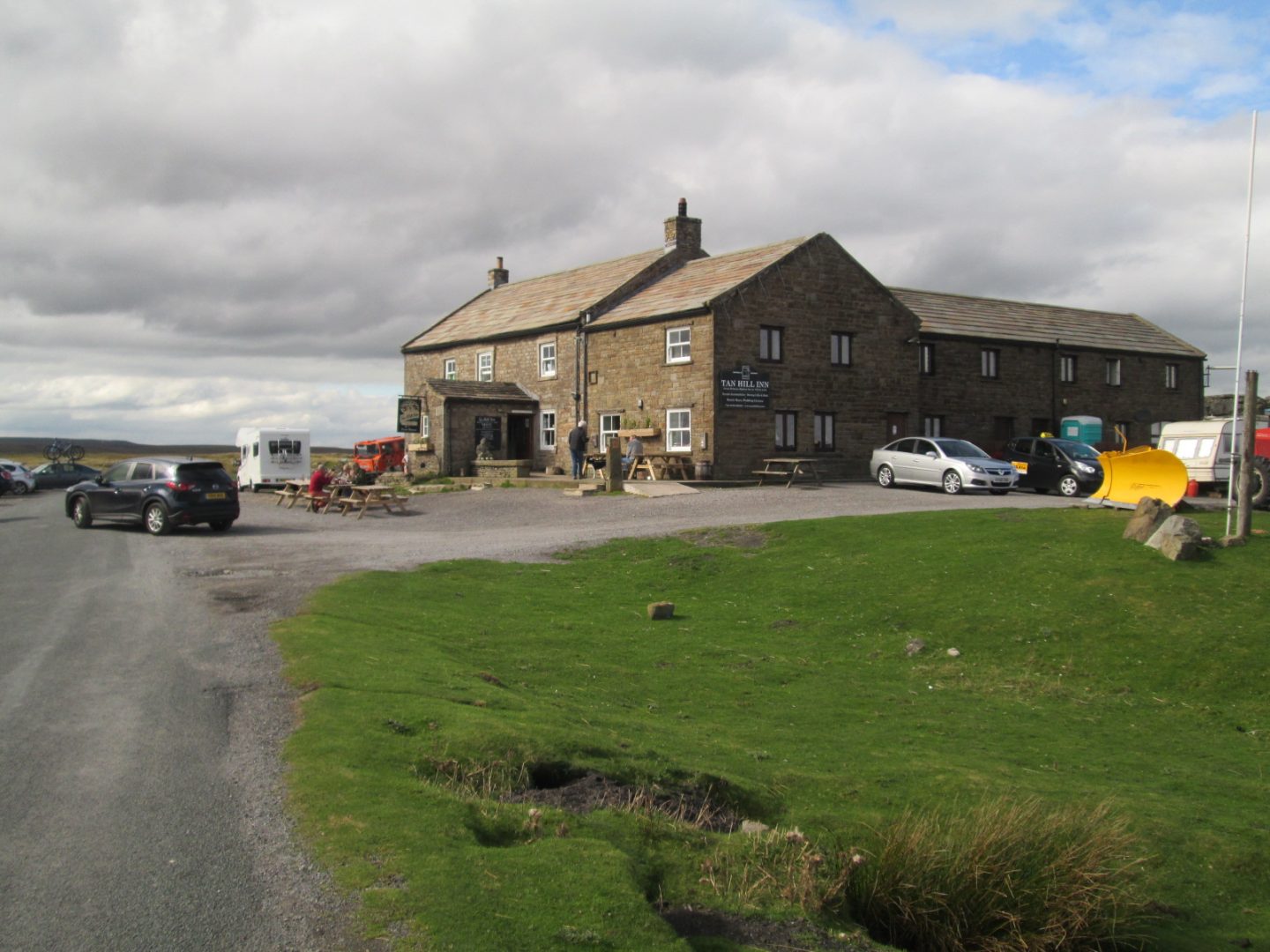
It really is alone. I’ve reached it by coming up a gravel track off the main road, which I runs parallel to the trail for a short period.
I can see all the trucks and artics passing and feel glad that I took the longer route.
If you look at the Strava, this is one of the steepest climbs today.
But it pales in insignificance compared to the Oxnop…